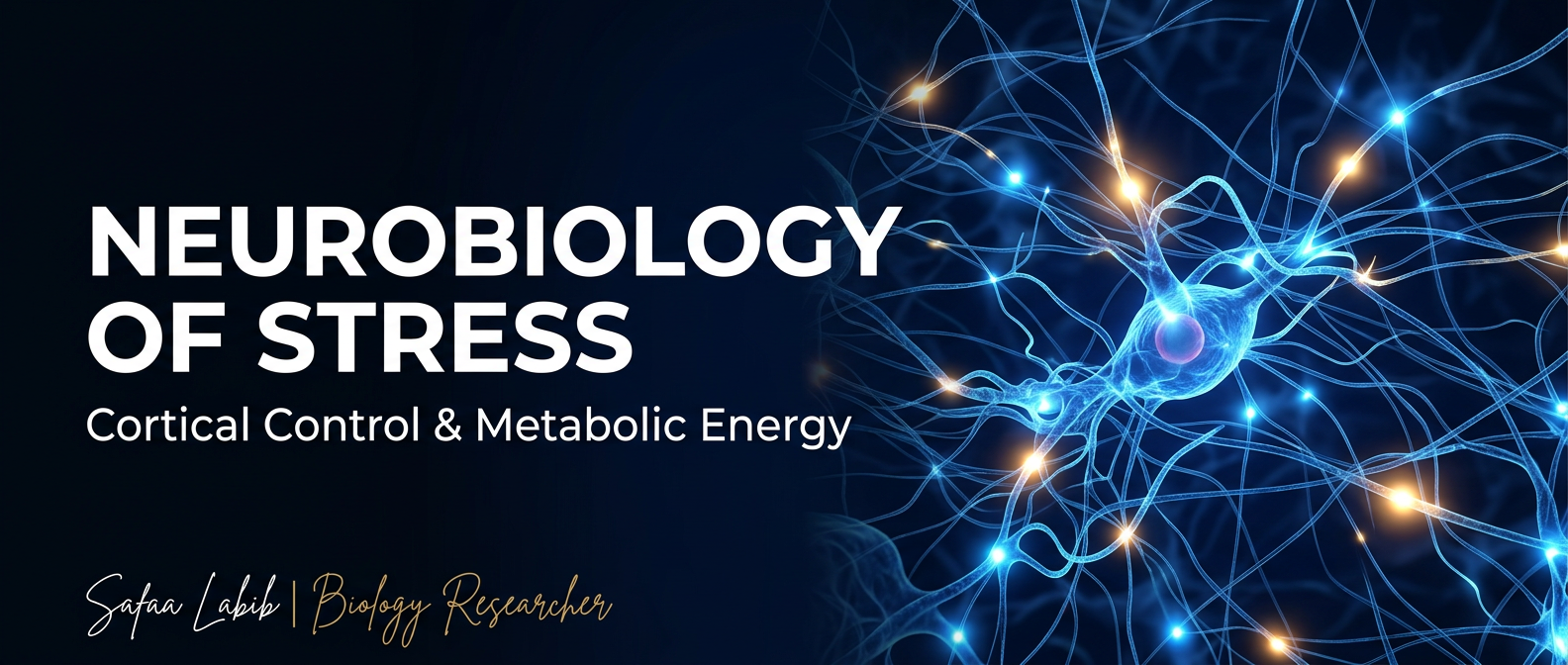
Why Human Physiology Lacks an Emotional Deactivation Switch: A Neurobiological Perspective on Stress and Cortical Control
...
Executive Summary
Human evolution has consistently prioritized survival mechanisms over emotional quietude. Modern neurobiological research—including recent meta-analytic findings from the American Psychological Association (2026)—demonstrates that emotional dysregulation is not a psychological or moral failing. Instead, it reflects a structural, metabolic, and hormonal bottleneck within the central nervous system. This article examines the biological mechanics behind neural high-jacking, the metabolic cost of prefrontal executive control, and the physiological protocols required to restore neural equilibrium.
The Survival Imperative: Why Evolution Omitted a "Reset" Button
For decades, popular self-regulation literature has advocated that emotional stability can be attained purely through cognitive intent or willpower. From an evolutionary biology standpoint, this premise is flawed. The human nervous system was optimized for threat detection and rapid mobilization, not continuous internal tranquility.
While a stress response activates within milliseconds, the biological cascade required to suppress that activation operates on a significantly delayed timeline. Emotional dysregulation represents a temporary misalignment between primitive survival circuits and modern cognitive processing—a structural limitation embedded in human neuroanatomy.
The Hormonal Blockade: HPA Axis Dynamics and Prefrontal Suppression
The primary mechanism underlying persistent emotional distress is the sustained activation of the Hypothalamic-Pituitary-Adrenal (HPA) axis. Upon detecting an environmental or psychological stressor, the adrenal cortex secretes cortisol into systemic circulation.
In acute scenarios, elevated cortisol enhances focus and energy mobilization. However, under prolonged stress, systemic cortisol levels create what can be described as a biological deadlock. Continuous exposure to glucocorticoids impairs the structural integrity and functionality of the Prefrontal Cortex (PFC)—the brain’s primary region for executive function, logical analysis, and top-down inhibition.
When prefrontal activity is suppressed, its capacity to send inhibitory, calming signals (via GABAergic pathways) to the amygdala is severely compromised. The fear-and-alarm center remains hyperactive not due to a lack of effort, but because the biological pathways responsible for signaling "safety" have been chemically disrupted.
Transdiagnostic Impairments: The Neural Architecture of Distress
A key insight confirmed by recent 2026 psychological and neurobiological reviews is that emotional dysregulation functions as a transdiagnostic feature. Whether examining clinical anxiety, major depressive disorder, or post-traumatic stress, the underlying neurobiological disruption remains remarkably uniform: a structural failure in top-down regulation.
In a well-regulated nervous system, the PFC acts as an executive filter, assessing emotional impulses before they translate into behavior or physiological panic. Under chronic stress, synaptic density within these regulatory pathways diminishes. This reduction in synaptic connectivity physically restricts the brain's ability to down-regulate internal arousal without specific somatic or environmental interventions.
Digital Environments, Mirror Neurons, and Metabolic Exhaustion
Modern digital environments introduce an additional layer of physiological strain: neuroceptive dissonance. Human mirror neuron networks evolved to process real-time, face-to-face social cues, interpreting subtle facial movements and voice modulations to assess threat levels.
Interacting with artificial, rapid, or synthetic media creates an "uncanny valley" effect in human perception. The prefrontal cortex continuously works to resolve these computational prediction errors. This process consumes significant quantities of cellular energy (glucose and intracellular adenosine triphosphate - ATP).
When brain tissue suffers from metabolic depletion, it loses the energetic surplus required to maintain emotional control. Consequently, emotional vulnerability is often the direct downstream result of metabolic fatigue within executive brain networks.
Somatic and Metabolic Protocols for Reclaiming Neural Control
Because the brain lacks a direct conscious "off switch," regulation must be induced via bottom-up physiological pathways (afferent signaling).
Vagal Stimulation: The vagus nerve serves as the primary parasympathetic pathway connecting organs to the brainstem. Controlled, slow exhalations and specific diaphragmatic breathing patterns increase heart rate variability (HRV) and mechanically signal safety to the brainstem, bypassing compromised prefrontal circuits.
Mitochondrial & Metabolic Support: High-level cognitive control and prefrontal inhibition are resource-intensive tasks. Sustaining neural stability requires adequate mitochondrial function, which is dependent on consistent sleep architecture, stable glucose regulation, and proper micronutrient availability.
BDNF and Synaptic Plasticity: Overcoming established "anxiety circuits" requires structural remodeling. Promoting Brain-Derived Neurotrophic Factor (BDNF) through targeted exercise, metabolic rest, and behavioral repetition provides the molecular groundwork needed to rebuild regulatory connections between the PFC and the limbic system.
Conclusion: From Emotional Shame to Physiological Stewardship
Understanding emotional dysregulation as a metabolic and structural phenomenon shifts the paradigm away from self-blame toward biological management. Nature did not provide an instantaneous "off" switch because constant vigilance kept early humans alive. In the modern age, navigating chronic stressors requires cultivating the internal physical and metabolic conditions that allow our higher cortical structures to effectively guide and calm our subconscious survival mechanisms.
Key Academic References & Further Reading
American Psychological Association (2026). Temperament, personality, and psychopathology in youth: A preregistered multilevel meta-analytic review and replication. Psychological Bulletin, 152(2).
Clamor, A., Lincoln, T. M., & Schulze, L. (2026). Emotion regulation in mental disorders: A systematic review and multilevel meta-analysis of transdiagnostic impairments. Psychological Bulletin, 152(2).
Grund, A., Roelle, J., & Schmid, S. (2026). Is thinking inherently unpleasant? A biological perspective on cognitive effort and metabolic costs. APA PsycArticles.
Porges, S. W. (2023). The Polyvagal Theory: Neurophysiological Foundations of Emotions, Attachment, and Self-regulation. W. W. Norton & Company.
Sapolsky, R. M. (2017). Behave: The Biology of Humans at Our Best and Worst. Penguin Press.
Support My Research & Stay Connected
If you found this biological deep dive valuable, I invite you to join my growing community of science-driven readers. My work is dedicated to exploring the intersection of neurobiology, psychoanalysis, and physical health to help you reclaim your Biological Sovereignty.
Subscribe to My Substack: Join the “Biological Sovereignty” newsletter for exclusive research updates, in-depth biological protocols, and nuanced insights delivered directly to your inbox.
👉 Join the Community on Substack
Support My Independent Work: If you’d like to fuel my research and help me create more high-quality, evidence-based content, consider supporting me. You can join my paid tiers on 👉 Patreon,
Connect Professionally: For professional networking, updates on my academic research, and industry discussions, let’s connect on 👉 LinkedIn
Explore More: You can find a collection of my published work and curated stories here:
👉 Safaa Labib on Digitalmehmet
Thank you for being part of this journey toward mastering your internal ecosystem.
Digitale Signaturen des Artikels
Was sind die digitalen Signaturen und wie prüfe ich die?Inhalts-Signatur:
427ba0cc97498d1b8f68741137bb7eb6MGUCMQDk8Dk3jG+c6E/2xg/8M83Bky8J5+0/dEb/LNCzZNzb7PYlFuNURY1+MJBB26BEdYACMHBPKle7JHU2OSze7llkYDpO8SL27rum7ZIbxUbkQvuyRhLwhlspyAYJvHawHd5Jqw==
Content Nation Signatur
MGYCMQCR2KKD1+lUzpvCO6XnJjiu0OVV/xv3OjtTw6Lsl08k2sgRdZnWrWweA8w9s+Uocq0CMQC4DN8tyAW1AzIVxc5l01bJ6ssl87W0szoIWPVGQZ1AQ/LGOllqCcCQQKszBMMRRiY=
Mehr Signatur-Informationen
Inhalts-Signatur:
Profil public key (427ba0cc97498d1b8f68741137bb7eb6)